Validation 01 Aerospace sand casting foundry
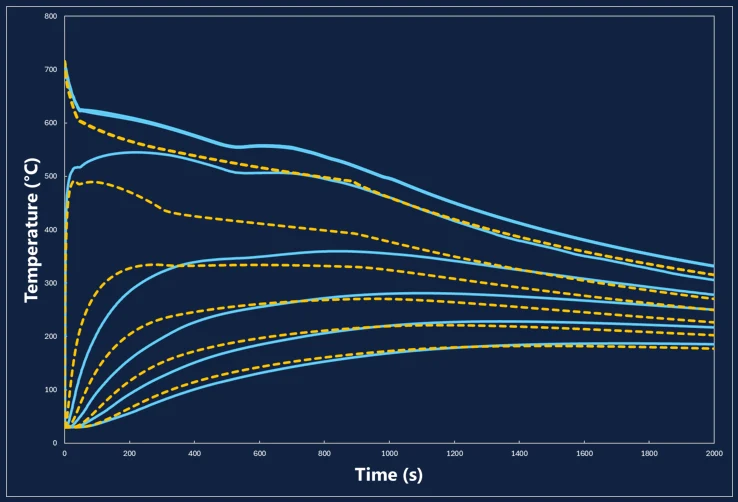
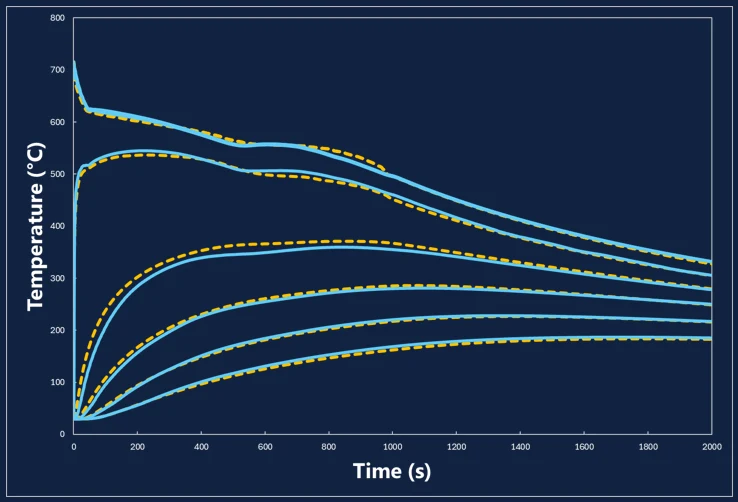
Simulation predictions Actual measurements
Prediction error reduced 5× — average simulation accuracy of 99%.
TwinCAST™ by TwinTech Materials
The best solver in the world can't outrun bad inputs. TwinCAST combines casting physics with AI to predict the true thermophysical properties of your alloys and molds — from a single test pour in your own shop — so your digital twin behaves like the metal you actually pour.
Validated in aerospace & automotive foundries Works with your simulation software Runs 100% on-site
Dendritic solidification — simulated
The problem
Foundries have spent decades running world-class solvers on generic handbook data — the classic “garbage in, garbage out” problem. When the thermophysical properties in the model don't match the alloy and mold on your floor, predictions drift, defects slip into production, and simulation becomes a suggestion instead of a tool.
TwinCAST closes that gap. It predicts the properties your simulation actually depends on — for your exact alloy, your exact mold system, your exact process — so predicted results near-perfectly match your real-world castings.
See the validation dataThe workflow
Choose the alloy and mold combination you want to characterize.
Run a simple test with the approved setup to collect thermal data — it takes as long as one pour.
Enter the collected data into TwinCAST, running locally at your site.
Receive predicted alloy, mold, and interface properties in minutes.
Apply the properties in the casting simulation software you already use.
No thermodynamic databases. No months of inverse iteration. No data leaving your building.
Validation
Dashed lines are simulation predictions. Solid lines are thermocouple measurements from production castings. Before: generic database properties. After: the same solver, fed TwinCAST-predicted properties.
Validation 01 Aerospace sand casting foundry
Simulation predictions Actual measurements
Prediction error reduced 5× — average simulation accuracy of 99%.
Validation 02 Automotive sand casting foundry
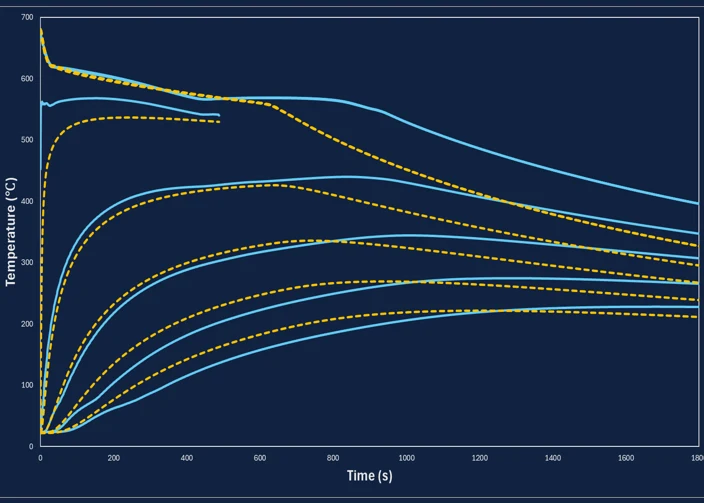
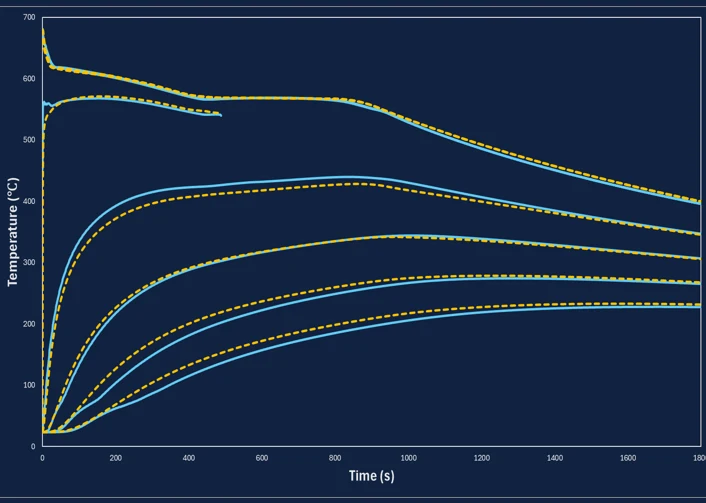
Simulation predictions Actual measurements
Prediction error reduced 4× — average simulation accuracy of 98%. One thermocouple lost signal at ~500 seconds.
Process fit
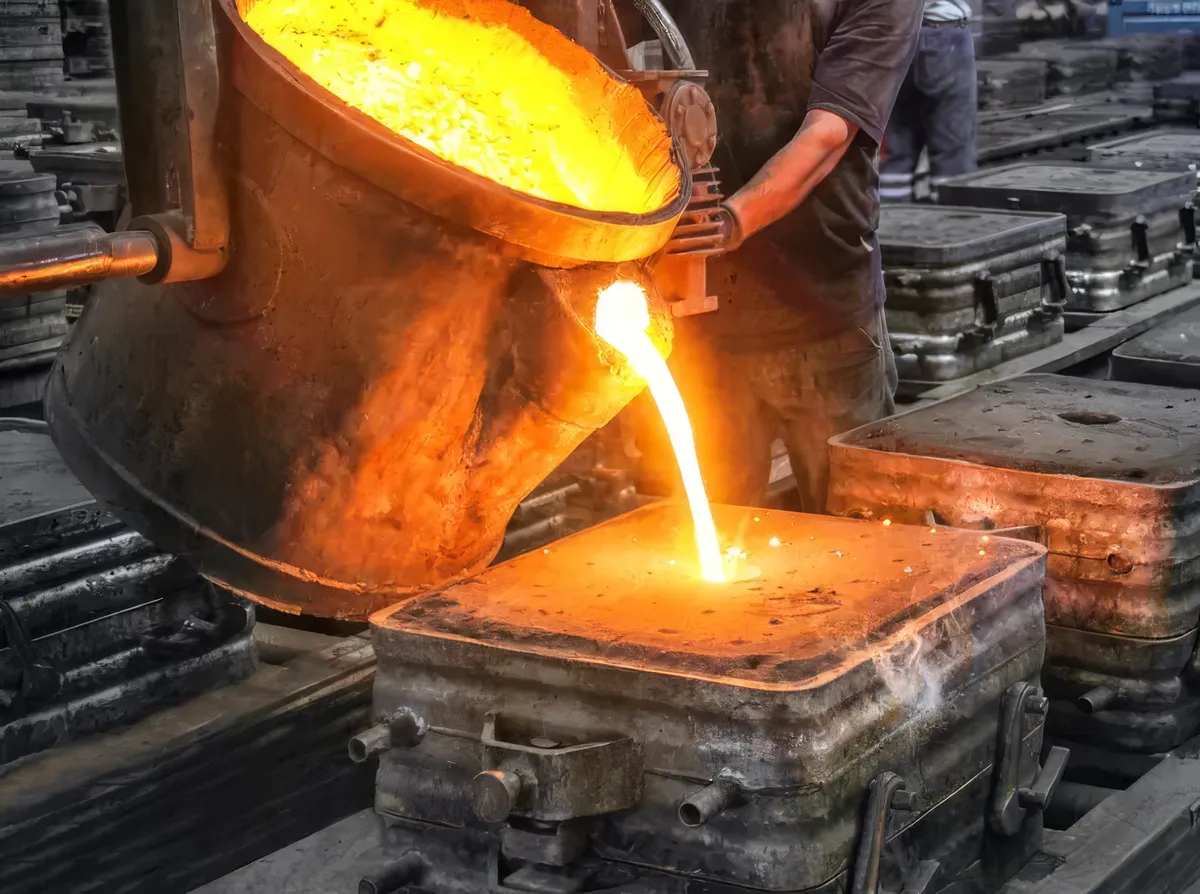
From traditional molding lines to 3D-printed molds, TwinCAST characterizes the exact sand system you pour into.
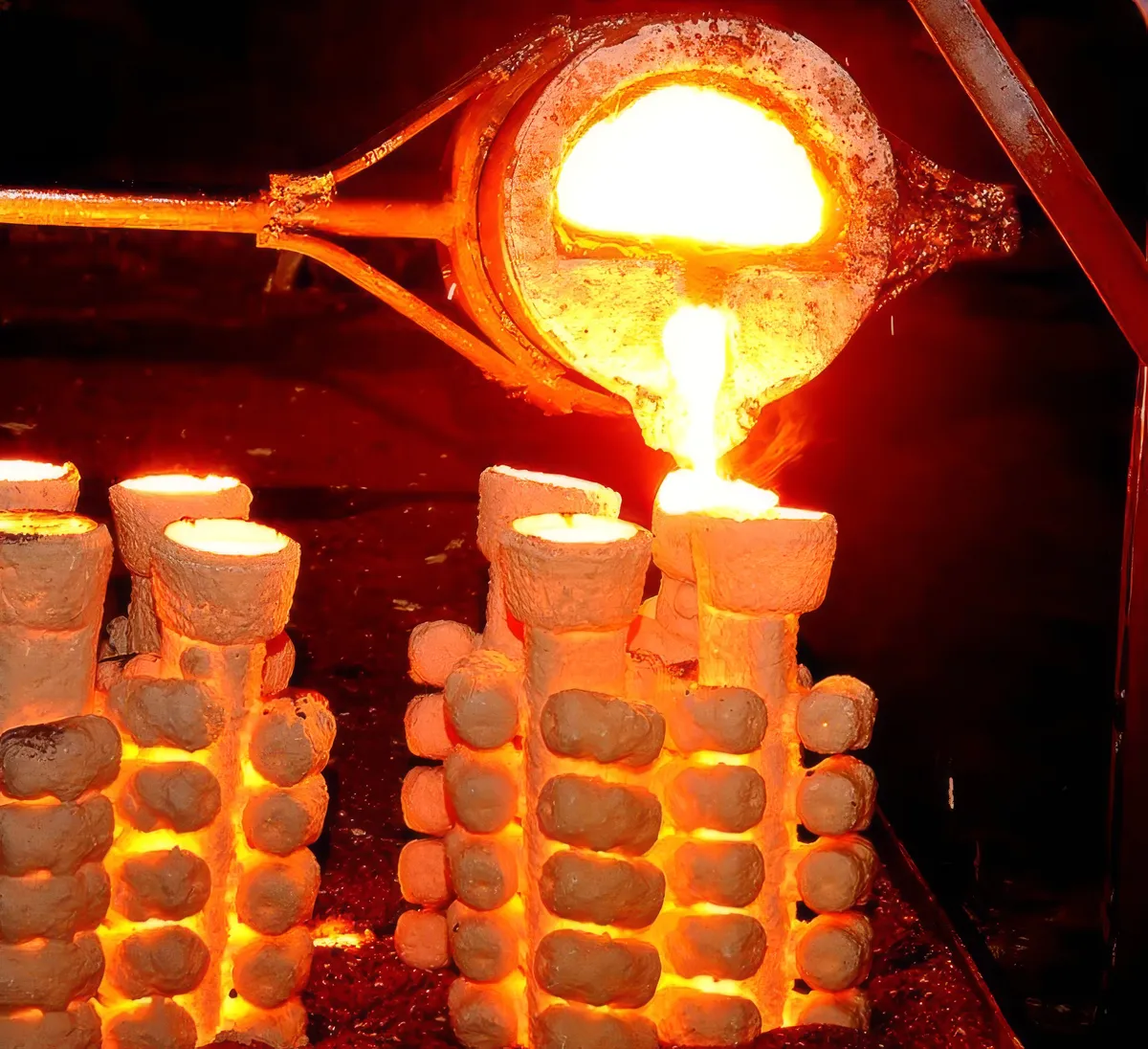
Shell systems vary — TwinCAST captures how yours actually transfers heat, in air or under vacuum.
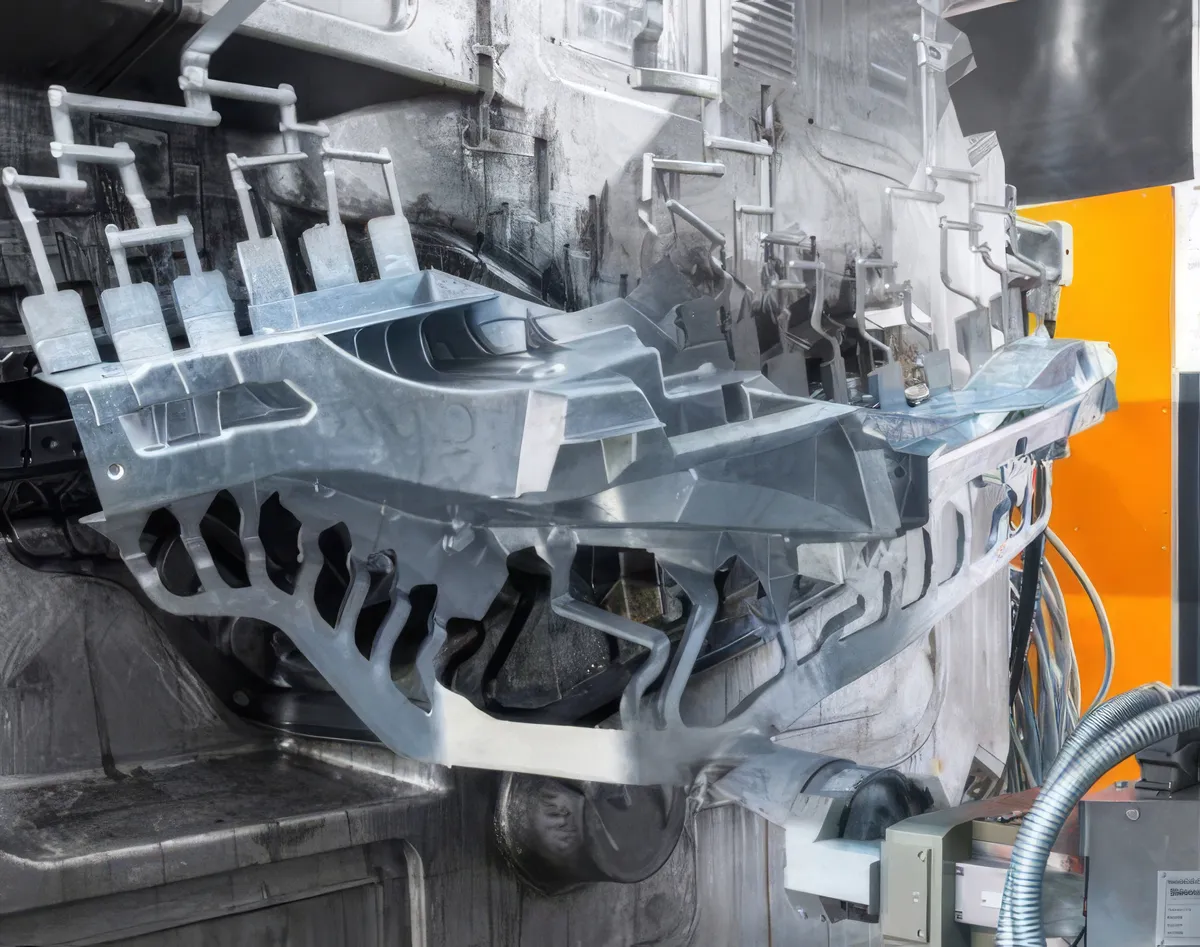
From HPDC to permanent mold, TwinCAST captures the true thermal behavior of your dies.
FAQ
TwinCAST is our proprietary software that intersects casting physics and AI to predict the thermophysical properties of a foundry's unique materials and processes. It is the bridge between actual and digital manufacturing, allowing foundries to quickly and reliably achieve near-perfect digital twin simulations that match what actually occurs on the foundry floor.
TwinCAST is specifically designed for foundries that already use some form of casting simulation software. TwinCAST is software-agnostic, allowing users of all kinds of simulation software to benefit.
You can buy the best simulation software in the world, but it won't be accurate without the right inputs. If you're using generic database values, you're leaving accuracy (and money) on the table: defects slip into production, driving costly scrap, rework, and long development and production cycle times. TwinCAST solves the "garbage in, garbage out" problem by predicting foundry-specific thermophysical properties with extreme accuracy—so you finally get the full value that simulation has always promised.
By combining TwinCAST with simulation software, you also unlock the ability to reliably optimize castings and rigging for stringent service requirements, manufacturability, and cost. This allows casting designers and foundries to converge on the right design faster—reducing trial-and-error, shortening development cycles, and delivering consistent quality at a lower total cost.
Unlike database material properties, TwinCAST accounts for a foundry's unique materials and processes. It is the only commercial tool that provides personalized results for both the alloy and mold.
TwinCAST personalizes results by using real measurements from your own shop. Along with the software, you get access to a simple test setup that lets your team collect data on your specific alloy and mold materials, and TwinCAST uses that data to tailor results.
Unlike CALPHAD, TwinCAST predicts the thermophysical properties of both the alloy and the mold, as well as the interfacial heat transfer coefficient. It does not rely on predefined thermodynamic databases or phase-equilibrium models; instead, it uses data from the actual alloys, mold materials, and process conditions on your foundry floor.
Traditional inverse methods typically tune uncertain inputs until a simulation matches a specific experiment, which can lead to non-unique solutions that are slow to compute, prone to instability, and difficult to transfer to other castings. TwinCAST instead predicts true alloy, mold, and interface properties that are representative of the real tested material system, so those inputs can transfer to other castings that use the same materials and process conditions. Unlike iterative inverse workflows, TwinCAST generates those inputs in seconds without costly simulation loops.
As long as it takes to pour one casting. Once the test kit data is collected and provided to TwinCAST, predictions are ready in just a few minutes!
Yes. TwinCAST runs locally at your site, so your test data and predicted properties stay with you—we don't collect or store them. All data belongs to the customer.
This depends on each foundry's needs. Our general recommendation is to test the exact alloy + mold combinations you run in production for customer parts, re-testing anytime those materials or key process settings change, and doing a quick check monthly to quarterly to catch normal property drift. TwinCAST can also be useful in R&D to test new material and process combinations before moving them into production.
Onboarding is straightforward. We start with a short call to understand your foundry process and specific needs, then point you to the right approved test setup. After that, you install TwinCAST, we provide a license to activate it, and your team can start running tests and generating foundry-specific property data on demand.
Ready to digitally transform your foundry? Fill out the contact form or send an email to info@twintechmaterials.com to get started.
Get started
Book a demo or tell us about your process — we'll get back to you soon. Prefer email? info@twintechmaterials.com